
“He was an exemplary boy and very affectionate to me.”
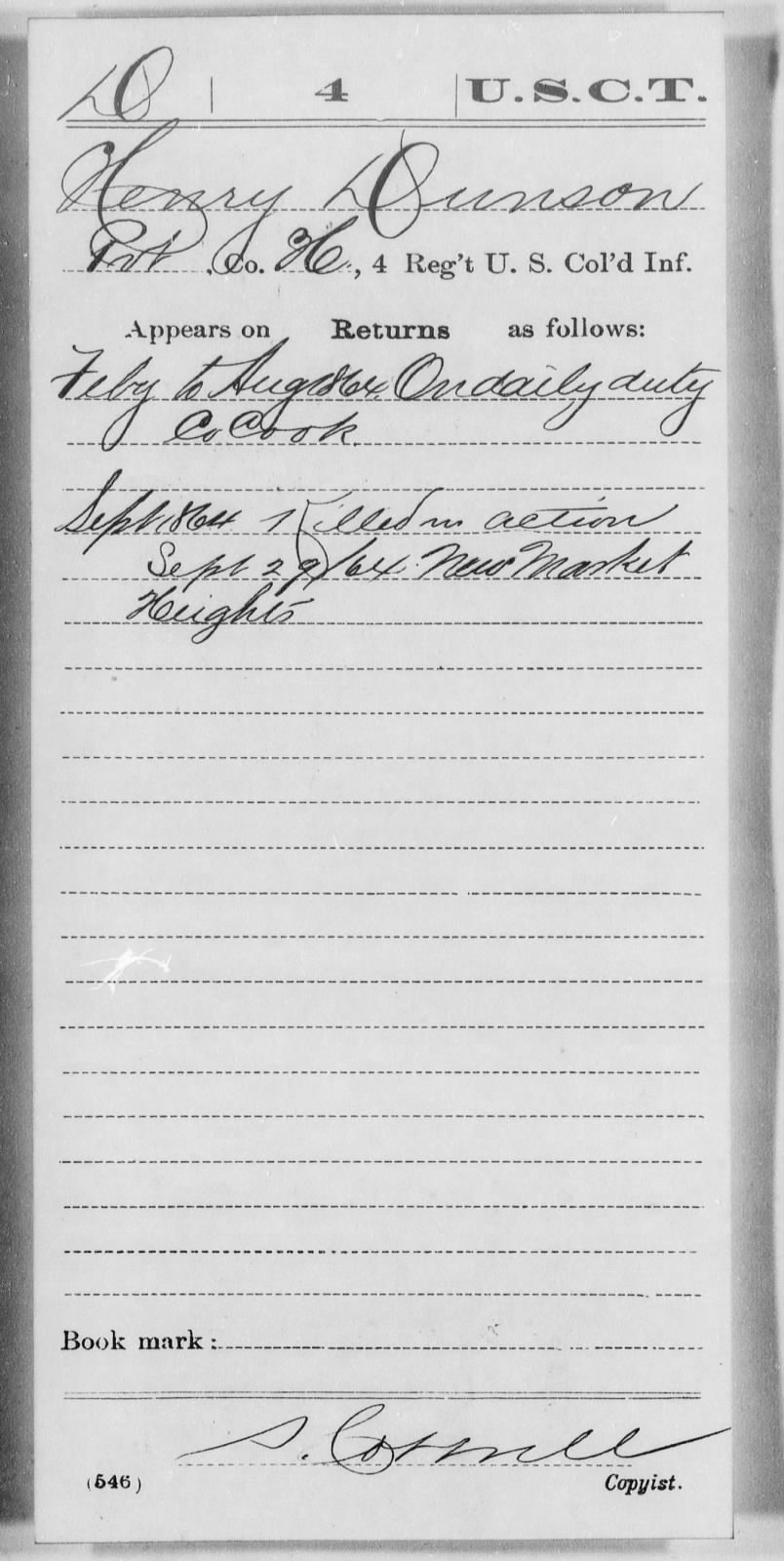
So said Ann Dunson about her 23-year-old son Henry, who was killed on September 29, 1864, in the first wave of attack on New Market Heights.
The grieving mother applied for a pension within a month of her son’s death and, fortunately for posterity, she included in her application one of the scarcest items anyone studying Black Civil War soldiers can hope to find – letters home from a USCT.
Henry Dunson, Jr. (sometimes spelled Dunstan) was the oldest of five children belonging to Ann and Henry Dunson, Sr. of Baltimore. The 1850 Census describes him as a 10-year-old free-born mulatto. His father died sometime before 1863, when Henry’s name shows up in the Baltimore City Directory as a resident of 7 Marion Street. Ann is listed as living at the same address and is described as a house cleaner by trade.
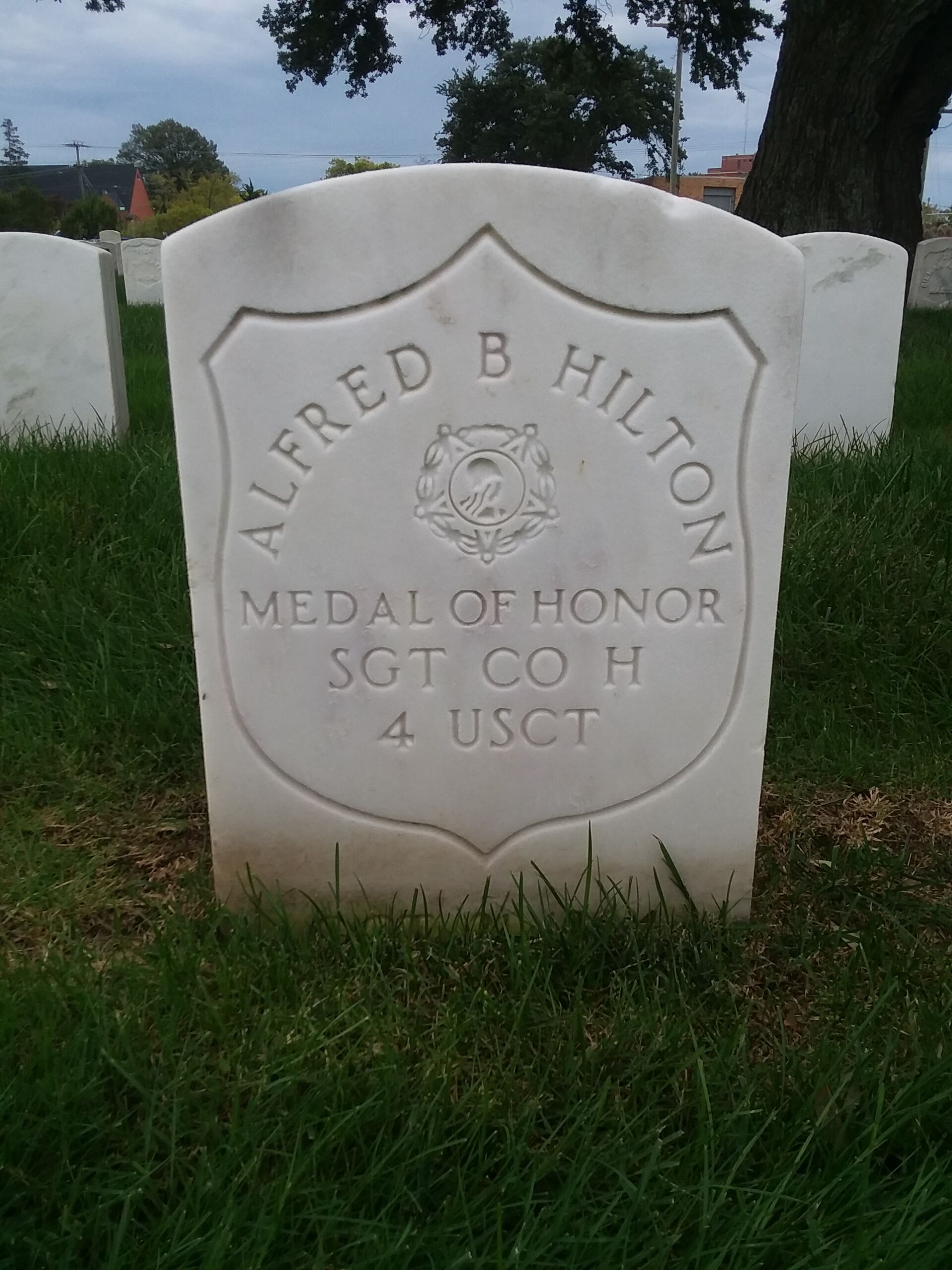
On August 11, 1863, Henry enlisted in the US Colored Troops in Baltimore. His service record shows him as 5 feet 8 inches tall and lists his former occupation as “waiter.” Dunson was assigned to Company H, 4th US Colored Infantry – the same company as famed Medal of Honor recipient Sgt. Alfred Hilton.
Henry is listed as “sick in quarters” in November and December 1863, and when the new year came, he must have put some of his former training as a waiter to good use, as he was listed as “detailed as company cook” from January to August 1864.
January was also when the first surviving letter that Henry sent to his mother was composed. He begins:
Dear mother, I take my pen in hand to inform you that I am well at the present time and I hope these few lines may find you enjoying good health. I would have wrote before now but we have been moving about so much that I haven’t had the opportunity to write until the present. I hope everyone will write and let me know how you are.
He then asks his mother about the status of his enlistment bounty. This is not surprising, as Black soldiers and their families frequently faced discrimination, delayed payments, and administrative hurdles in receiving the funds promised to them upon enlistment. A second letter written that month was mailed from a camp in Yorktown, and is filled more requests for updates from home.
By May, Dunson was at Fortress Monroe, and informed his mother:
I received your kind letter and was glad to hear that you were well but I ware worry to hear that you have so much trouble and sickness in the family, yet these we cannot avoid, but if it ware in my power I would come to your relief but circumstances will not admit of it at this time. But I will do all I can for you even in this hour of trouble.
His constant attention was on his mother’s health and welfare, and he told her that “I hope that the day will soon come when this cruel war will have an end and I shall be at your side as a staff to you in your decrepit age for unto you my honours are due.” Henry mentions that he enclosed his photo along with some money and includes a rare line about something other than the folks back home:
Prayers for our victory are triumphant for we are laboring for one of the most glorious causes that ever a nation fought for and we believe that the Lord is on our side who can be against us.
He also addressed the infamous USCT pay inequality, stating:
I thought that I would have been able to send you some more money before this time but we have not been paid off since I sent you the last but we have now the prospect of thirteen dollars a month and maybe I will be able to send you some more.
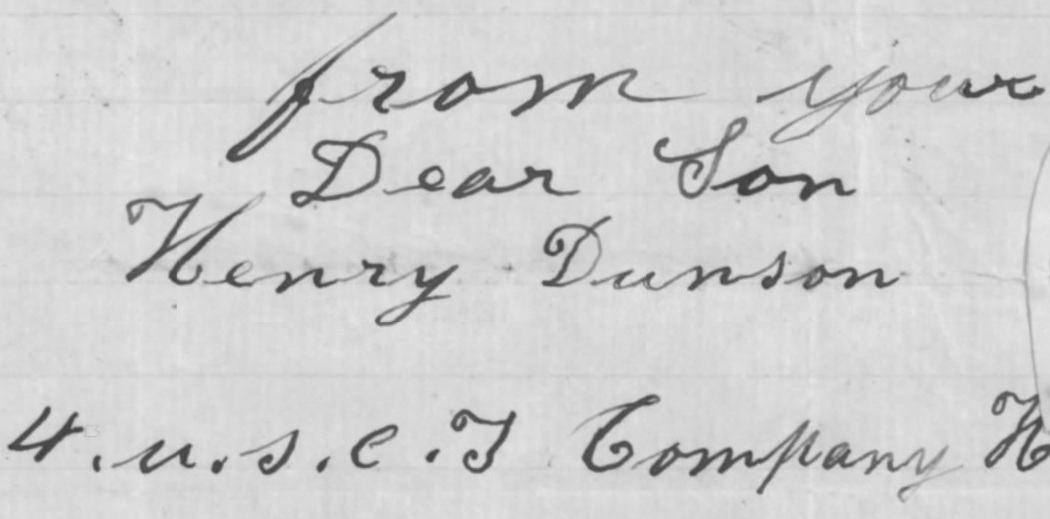
The last letter in the pension file is dated July 11, 1864, from City Point. Dunson tells his mother that the bounty issue has apparently been fixed and to pass along word that a soldier in his company, Solomon Sharp, was killed during the Second Battle of Petersburg on June 15, 1864. He then concludes with his usual farewell:
Nothing more at this time. Write soon and often. From your dear son, Henry Dunson, 4 U.S.C.T. Company H
The documentary trail goes cold from here, but from Dunson’s service record we learn that he was “killed in action Sept 29/64, at New Market Heights Va.”
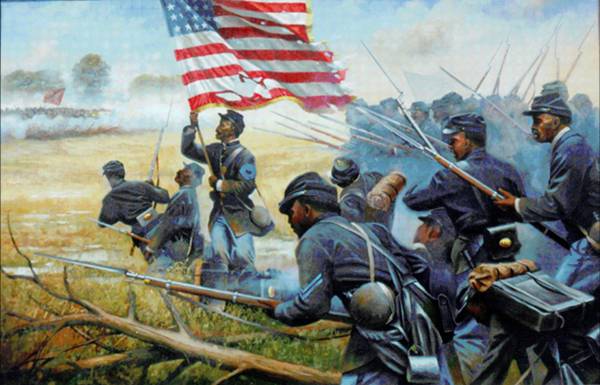
Sgt. Maj. Christian Fleetwood of the 4th USCI gave a harrowing account of what would prove to be Dunson’s final moments:
My regiment, the 4th U.S.C.T., lined up for the charge upon the rebel works at New Market Heights, Va., on the morning of September 29, 1864, with eleven officers and 305 enlisted men. There was but one field officer with us, Major A. S. Borenstein who was in command. Our adjutant, Geo. Allen supervised the right, and I as Sergeant-Major, the left. When the charge was started, our Color guard was full; two sergeants (carrying the Colors,) and ten corporals. Only one of the twelve came off that field on his own feet. Most of them are there still. Early in the rush, one of the sergeants went down. I regret much not being able to recall his name. A bullet cut his flagstaff in two, and went through his body, the other Sergeant Alfred B, Hilton, Co. H., a magnificent specimen of a man, over six feet tall and splendidly proportioned caught up the other flag and pressed forward with them both. It was a deadly hailstorm of bullets sweeping men down as hail-stones sweep the leaves from trees, and it was not long before he also went down, shot through the leg. As he fell, he held up the flags and shouted, “Boys, save, the Colors!” Before they could touch the ground, Corporal Charles Veal, Co. D. had seized the blue flag, and I the American flag, which had been presented to us by our lady friends before leaving Baltimore, Md., our home. It was very evident that there was too much work cut out for our two regiments, (the 4th and 6th U.S.C.T.) to accomplish. Strong earthworks, protected in front by two lines of abatis, and one line of palisades, and in the rear by a lot of men who evidently knew how to shoot, and largely outnumbered us. We struggled through the two lines of abatis, a few got through the palisades, but it was sheer madness, and those of us who were able, had to get out as best we could. Reaching the line of our reserves, and no commissioned officer being in sight, I rallied the survivors around the flag, rounding up at first 85 men and three commissioned officers. Through the day, about thirty more men came along – all that was left of them.
It remains unknown at what point during the charge Private Dunson was killed, and a cursory search for his grave location has proven frustrating. Perhaps he is one of the many unknowns interred at one of the national cemeteries around Richmond or Hampton.
Ann Dunson reveals in her pension application that she learned of her son’s fate through a letter written by one of his comrades. It was noted that Henry had no personal effects on him when he died, so all that she had to remember him by were his letters home and the image of a young soldier, now lost to history.
As we approach the 162nd anniversary of the Battle of New Market Heights, we should pause to remember the bravery that Dunson and his compatriots displayed. Their sacrifice should never be forgotten, as their courage helped shape the nation’s journey toward freedom and equality.